The Breathable Mattress Every Parent Needs
When you bring a newborn home from the hospital, your perspective on the world shifts overnight. Suddenly, the most mundane object—a blanket, a stuffed animal, or a mattress—is viewed through the lens of potential risk. Among all the gear parents research, the crib mattress is arguably the most critical. While a stroller affects your mobility and a high chair affects mealtime, the mattress is where your child will spend 12 to 16 hours a day during their most formative period of brain and physical development.
For years, the "gold standard" for crib mattresses was simply a firm, flat surface. But as our understanding of infant physiology and sleep safety has evolved, so has the technology designed to protect our most vulnerable sleepers. At GooGaia, we believe that the Newton Baby Mattress represents a paradigm shift in infant sleep safety, moving beyond "firmness" and into the realm of "active safety" through breathability.
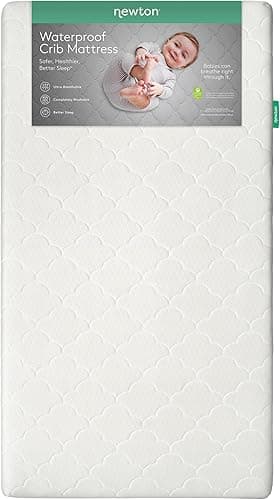
Newton Baby Waterproof Crib Mattress & Toddler Bed
Newton's revolutionary Wovenaire® core is 90% air — if a baby rolls onto it face-down, they can breathe right through it, making it the only crib mattress with a breathe-through design. It's also 100% washable, from the cover to the core.
The Science of Breathability: Why It Matters for Development
To understand why a breathable mattress is essential, we must first look at the physiology of an infant. Newborns and infants have a high surface-area-to-volume ratio, and their internal thermostat is still under construction. They cannot regulate their body temperature as efficiently as adults can, nor can they easily move themselves if their breathing is compromised.
Carbon Dioxide Rebreathing
One of the primary concerns for sleep safety experts is the concept of "CO2 rebreathing." When an infant rolls onto their stomach—a milestone that often happens unexpectedly in the middle of the night—their face can become pressed against the mattress surface. In a traditional foam or inner-spring mattress, the exhaled carbon dioxide can become trapped in the fabric or foam. The baby then breathes that same CO2 back in, which can lead to hypoxia (low oxygen levels).
The Newton Baby Mattress utilizes a proprietary "Wovenaire" technology that is 90% air by volume. Because the core is not a solid block of foam but a structured lattice of food-grade polymer, air flows freely through the entire thickness of the mattress. In independent lab testing, this design has been shown to significantly reduce the risk of CO2 rebreathing. For a parent, this means that even if your "tummy sleeper" hasn't quite mastered the art of rolling back over, the mattress itself is working to keep their air supply fresh.
Thermoregulation and Sleep Quality
Overheating is a known risk factor for Sudden Infant Death Syndrome (SIDS). Traditional mattresses, particularly those made with waterproof plastic covers or dense memory foam, tend to trap body heat. This can lead to a restless, sweaty baby who wakes up frequently due to discomfort.
The Wovenaire core allows for constant air circulation, which helps dissipate body heat and keep the baby at a neutral temperature. From a developmental standpoint, better temperature regulation leads to longer stretches of restorative REM sleep, which is when the brain processes the day's learning and grows new neural connections.
The Wovenaire Breakthrough: A Deeper Look at the Technology
The "Wovenaire" material is what sets this mattress apart from every other option on the market. Most "breathable" mattresses on the market achieve their rating through a porous cover, but the core itself remains solid foam. Once that cover is saturated or if the baby’s face is pressed firmly against it, the breathability is compromised.
Newton took a different approach. The core is made of a food-grade polymer (the same material used in yogurt containers) that is "spun" into a cloud-like structure.
No Off-Gassing or VOCs
Many parents are rightfully concerned about "off-gassing"—the release of Volatile Organic Compounds (VOCs) from synthetic foams and glues. Because the Newton mattress contains no foam, glue, latex, or springs, it is naturally hypoallergenic and GREENGUARD Gold certified. This is particularly important for infants, whose respiratory systems are highly sensitive to environmental toxins. By choosing a mattress free of chemical flame retardants, you are ensuring that the air your baby breathes for 12 hours a day is as pure as possible.
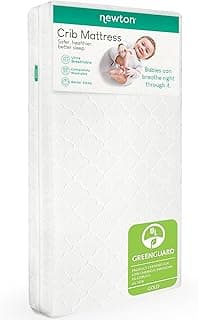
Newton Baby Crib Mattress
BREATHE-THRU SAFETY: The only crib mattress with a Wovenaire breathe-thru core. Our patented technology ensures optimal breathability, reducing the risk of suffocation and overheating. And because your baby is sleeping safe and sound, you’ll sleep better too. Measures 52" x 28" x 5.5". Core proudly made in the USA.
Hygiene: The Hidden Factor in Respiratory Health
We often think of "safety" in terms of immediate physical risks like suffocation, but long-term health is equally dependent on hygiene. Crib mattresses are notorious magnets for bacteria, mold, and dust mites. Between diaper leaks, spit-up, and sweat, the interior of a standard foam mattress can become a breeding ground for allergens that contribute to infant eczema and asthma.
The Newton Mattress is the only leading crib mattress that is 100% washable from cover to core.
How to Clean the Core
While the 3D-cloud cover can go in the washing machine, the Wovenaire core can be taken into the shower. You can literally rinse away the "messes" that would usually soak into the middle of a foam mattress and stay there forever.
- Unzip the cover: Wash it on a cold cycle.
- Rinse the core: Use cool water and a mild detergent in the bathtub or shower.
- Air dry: Because it’s 90% air, it dries remarkably fast compared to foam.
This level of hygiene is a game-changer for parents of children with sensitive skin or respiratory issues. Knowing that your child isn't sleeping on a year's worth of accumulated bacteria provides a different, but equally important, kind of peace of mind.
Expert Tip: When to Be Extra Vigilant
As a pediatric specialist, I often advise parents that the transition periods are the most critical. Specifically, keep an eye on the following:
- The 4-Month Roll: This is typically when babies start rolling from back to stomach. If you see your baby practicing this during floor time, ensure their sleep environment is entirely clear of pillows, bumpers, or loose blankets. This is when the breathability of the Newton mattress becomes your best friend.
- Signs of Overheating: If your baby wakes up with a damp chest, flushed cheeks, or heat rash, their sleep environment is too warm. Ensure the room temperature is between 68–72°F (20–22°C) and rely on the breathable mattress to do its job.
Parent-to-Parent: Tips for a Better Night’s Sleep
Transitioning a baby to a crib can be a stressful time for the whole family. Here are a few practical tips to make the process smoother:
- The "Face-Plant" Test: When you first get your Newton mattress, try it yourself. Press your face into it. You will realize that you can actually breathe through it. This experiential knowledge will help you sleep better when you hear your baby flip over on the monitor at 2:00 AM.
- Skip the Mattress Pad: Many parents reflexively buy a waterproof mattress pad. Do not do this with a Newton mattress. A waterproof pad is usually made of plastic or dense fabric that will block the airflow, effectively negating the safety benefits of the Wovenaire core. If you are worried about the mattress getting dirty, remember: the core itself is washable.
- Invest in Breathable Sheets: Use 100% muslin cotton or the specific Newton breathable sheets. Heavy, high-thread-count cotton sheets can also restrict the airflow that makes this mattress so effective.
When to Call the Pediatrician
While a safe mattress is a foundational tool, it is part of a larger picture of infant health. Consult your pediatrician if:
- Your baby seems to have persistent difficulty breathing during sleep (stridor, grunting, or significant chest retractions).
- Your baby frequently wakes up extremely lethargic or is difficult to rouse.
- You notice persistent skin rashes that do not clear up with standard hygiene, as this may indicate a specific environmental allergy.
The Verdict: Is It Worth the Investment?
There is no sugarcoating it: the Newton Baby Mattress is an investment. It sits at a higher price point than the standard foam mattresses you’ll find at big-box retailers. However, when evaluating the cost, we encourage parents to look at the "price per night" over several years.
Most crib mattresses are used from birth until age 3 or 4 (as many convert to toddler beds). Over 1,000 nights of sleep, the cost difference between a standard mattress and a Newton is less than the price of a single cup of coffee per week. For that investment, you are receiving:
- Reduced Suffocation Risk: Unmatched breathability for the "tummy-turning" phase.
- Superior Hygiene: A fully washable design that prevents mold and allergen buildup.
- Longevity: A core that doesn't "dip" or lose its firmness like cheap foam.
- Peace of Mind: The ability for you, the parent, to sleep soundly knowing your baby is in the safest possible environment.
In the world of parenting, "peace of mind" is often a marketing cliché. But in the case of the Newton Baby Mattress, it is a tangible result of thoughtful engineering and a deep commitment to infant safety. It is, quite simply, the mattress every parent needs for a safer, more restful home.